october 2026
Month 20xx
Hajir Butt
Gabriella Oteiza
Charmaine Gooden
Jacob Marion
Highlights
- Jimmy Wisdom started his career as a musician alongside his friend Bill Williams, and they both eventually immigrated to Canada in 1968.
- Wisdom changed careers from being a musician to a barber as his band faced censorship on the radio.
- He became revered for his barbering and his impact on the community.
Beginning of article
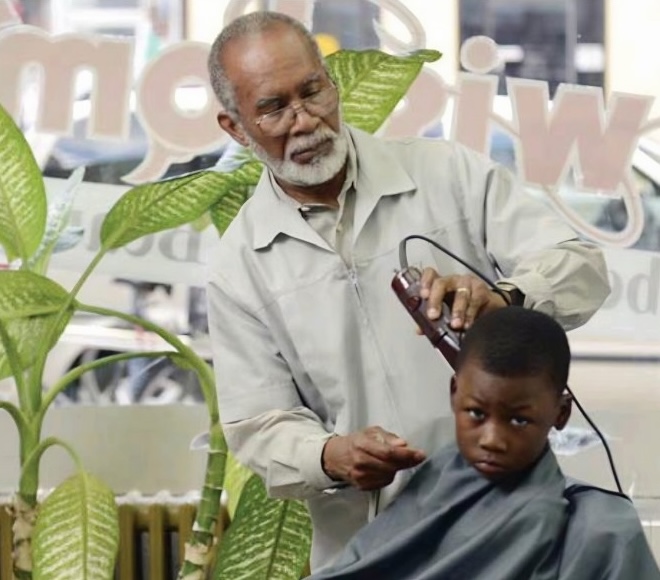
Jimmy Wisdom didn’t take appointments. Customers walked into Wisdom’s Barbershop and Beauty Salon, took a seat, and waited their turn. Yet people didn’t complain. With music playing in the background, a small TV on, and local newspapers and flyers to pass the time, clients talked, read and connected. Many knew one another from Jamaica or from the neighbourhood. At the centre of it all was Wisdom himself, a calm, quiet presence.
Known for his kindhearted spirit, Wisdom became a revered figure in his community. He was admired not only for his skill as a barber, but also for his gift for forming meaningful connections with those who sat in his chair. For many regulars, he was a steady presence: someone who offered good conversation, guidance, and, of course, a sharp haircut. He drew people from across the Greater Toronto Area, and the barbershop became a meeting place with a strong sense of community.
Early Life and Career
Ronald “Jimmy” Ashford Wisdom was born in Montego Bay, Jamaica, on January 25, 1947. During his youth, he formed a band with his friend Bob Williams, calling it “Bob and Wisdom.” In 1968, the duo immigrated to Canada, where their band flourished, performing various shows and sharing the stage with renowned musicians Bob Marley, Fats Domino, Jimmy Ruffin, Otis Redding, Solomon Burke and even the late Pierre Trudeau.
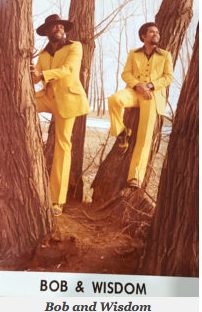
In an interview with The Globe and Mail, Williams spoke about the lack of further opportunities for their music in Toronto. “We never really had any offers or any deals, any recordings, or tours, not even an opening act for a big band that was playing in Toronto,” said Williams in the article.
He recounts a time when a radio programmer said their cover of Mac Davis’ “I Believe in Music” was the best cover that they had heard, but they refused to play it because Williams and Wisdom were Black. The industry’s limited opportunities ultimately led Wisdom to find work outside of music.
Although he no longer recorded, he continued to sing with his local church choir in his spare time.
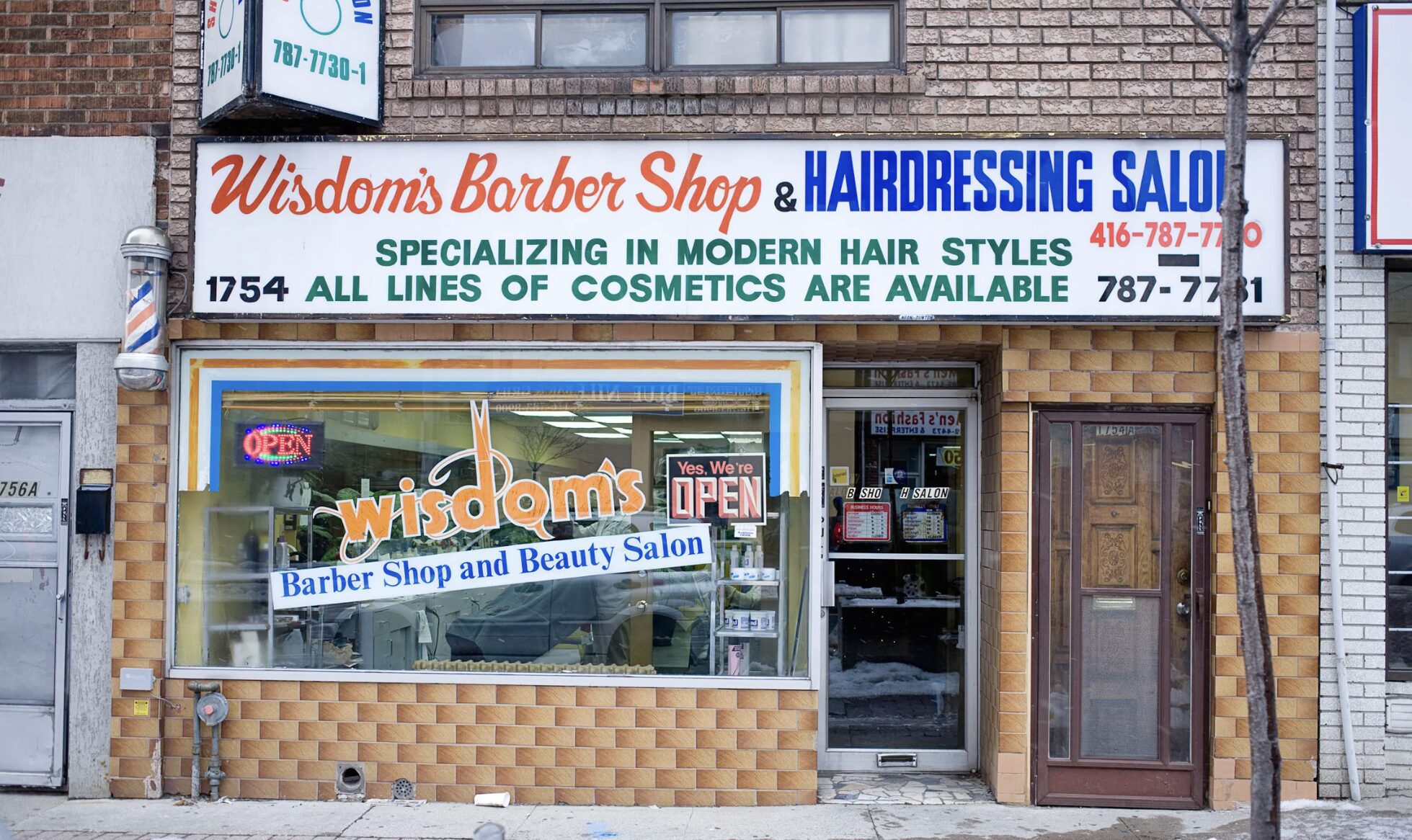
In 1974, he decided to open Wisdom’s Barber Shop and Beauty Salon in the Eglinton West community known as Little Jamaica. Alongside the barber shop was a hair salon for women, run by his wife, hairstylist Merva Wisdom. They expanded to a larger building in 1980.
While Wisdom was revered by his customers for his skill with their hair, it was also the connections he established that made the experience special for those who came to see him. In TVO’s 2016 documentary Learning Portrait: Jimmy Wisdom, Wisdom is shown cutting the hair of a friend and former drummer. As he handles the shave, Wisdom says, “Music is not too far removed from barbering.” He relates cutting his clients’ hair to painting a picture with a song.
“Everything I have done in my life is with people,” says Wisdom. “I think I’m one of the few barbers who, when I’m cutting hair, when I’m finished, I say thank you for the opportunity that you gave me…Nothing else can make you happy but people.”
He was known as a trusted resource, someone who helped people, especially newcomers, figure out where to go, what services were available, and how to access the support they needed.
Fashion and Diversity
Toronto city councillor and friend of Wisdom for over 35 years, Mike Colle, said that the haircut and advice went hand in hand. “I run across people every day who say they had their hair cut by him. But you didn’t just go to him for a haircut. You went when you needed advice. He would counsel people,” says Colle. Wisdom was all about people; he cared deeply for those in his community.
The care and respect Wisdom brought to his work were felt by many who sat in his chair. Constance Williams was one of the few women who went to his barbershop in the 1990s.
Newly retired and wanting a shorter hairstyle, she chose Wisdom on the recommendation of someone she knew. Conveniently, the shop was located close to where she lived.
Wanting only a short haircut, no braids or special styling, Constance opted for Wisdom’s chair rather than his wife Merva’s. In brief glimpses of their working rhythm, she could see that while they often worked independently, the couple ran the shop as a seamless team, cutting hair and keeping the business running smoothly together.
Soon, Constance became a regular at Wisdom’s. Visiting family members from Jamaica would also make a point of stopping by the shop to have their hair done while in Toronto. “Wisdom was very sociable,” she recalls. “He would always ask me about my family, even though he had only met them once or twice. If I was going back to Jamaica, he would give me themed calendars to bring to my sisters.”
“He enjoyed his work; he was respectful, approachable and caring,” she adds. “He was known as a trusted resource, someone who helped people, especially newcomers, figure out where to go, what services were available, and how to access the support they needed.”
On a more personal note, Constance noted that “he took his health seriously because we used to talk about it. He would get up early, go down to his basement, and exercise on his treadmill before heading to work.”
Despite the hustle and bustle of conversation, Wisdom had a quieter nature at times, but that didn’t stop him from building deep connections. Constance remembers how well he knew everyone in the area; so much so that when the postman would stop by, Wisdom would greet him by name.
In the midst of a vibrant and gregarious barbershop was a grounded, thoughtful barber who took his time with his craft and building connections with his customers.
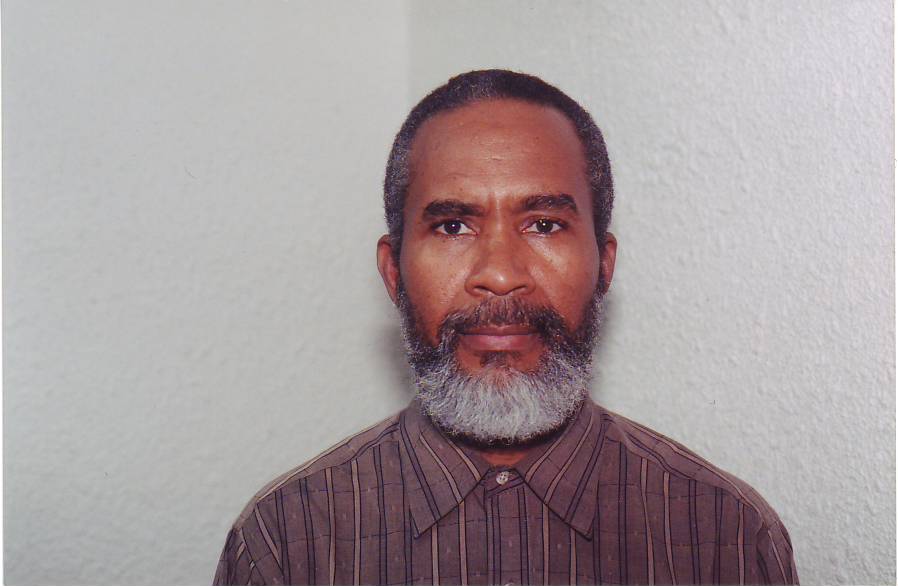
With music playing in the background, a small TV on, and local newspapers and flyers to pass the time, clients talked, read, and connected.
Influence and Legacy
Wisdom passed away on November 28, 2019, at the age of 72, at Sunnybrook Hospital in Toronto. News of his death came as a shock to the community.
“The night before his funeral, there was a kind of wake, and hundreds of people passed through,” describes Williams. The turnout spoke volumes when so many came simply to pay their respects.
In an article by Global News about Wisdom’s passing, Colle is quoted as saying that Wisdom created the “community hub” with his barbershop.
“He represents a whole wave of people who immigrated here, and Jimmy helped them get through this transition…The barbershop is like a little city hall. You go there, and people talk about their problems, their issues, their celebrations,” said Colle.
To commemorate his legacy, Councillor Colle commissioned a mural that was painted by local Toronto artist Adrian Hayles. The mural is a portrait painting of Wisdom set against a background reflecting the Jamaican coast.
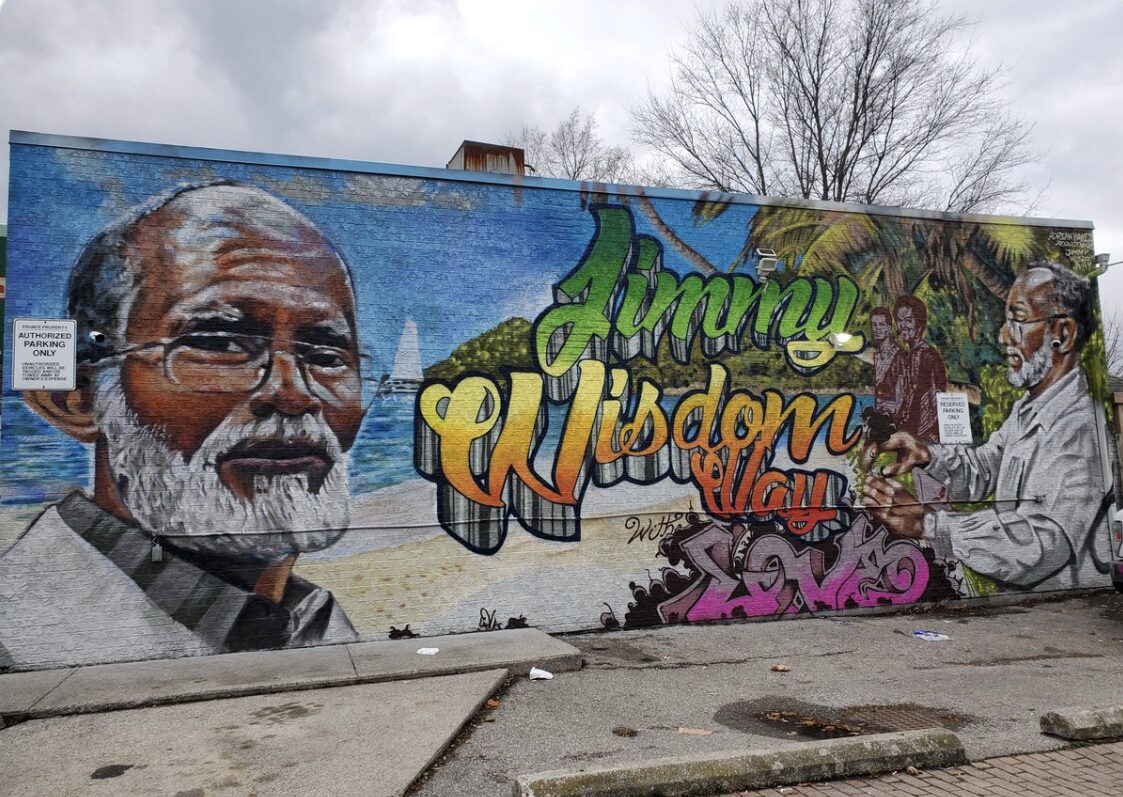
Along with the mural, the city renamed Locksley Avenue, between Eglinton Avenue West and Hopewell Avenue, to ‘Jimmy Wisdom Way,’ honouring his importance to the community and neighbourhood.
From playing R&B music alongside the greats to opening his own salon and forging connections with the people whose hair he cut, Wisdom found the rhythm in everything he did.
References and related links:
- Global News, “‘May he rest in perfect peace’: Hundreds attend funeral for Toronto barber Jimmy Wisdom,” December 14, 2019. https://globalnews.ca/news/6297570/hundreds-remember-jimmy-wisdom/
- Guy Dixon, “The Hidden Jamaican Soul of Toronto,” The Globe and Mail, July 15, 2006. https://www.theglobeandmail.com/arts/the-hidden-jamaican-soul-of-toronto/article18167696/
- TVO, “Learning Portrait: Jimmy Wisdom,” YouTube video. https://www.youtube.com/watch?v=9uUTLz9Pzj8.