June 2025
Month 20xx
Chase Cooper & Khadijah Ghauri
Charmaine Gooden
Jacob Marion
Highlights
- Born in Mississauga in 1972 to Jamaican parents, Rutherford discovered fashion through Toronto's nightlife scene before modelling in Montreal during the 1990s boom.
- After modelling stints in Montreal and New York, he became director at Elite Models Toronto, then relocated to manage Elite's L.A. office and co-founded Eight by 10 agency.
- Often the only Black person in rooms and on sets, he faced constant pressure to prove his worth.
- He founded Ruth Gravity Artists, a boutique agency championing Black, Asian and South Asian talent in film and television.
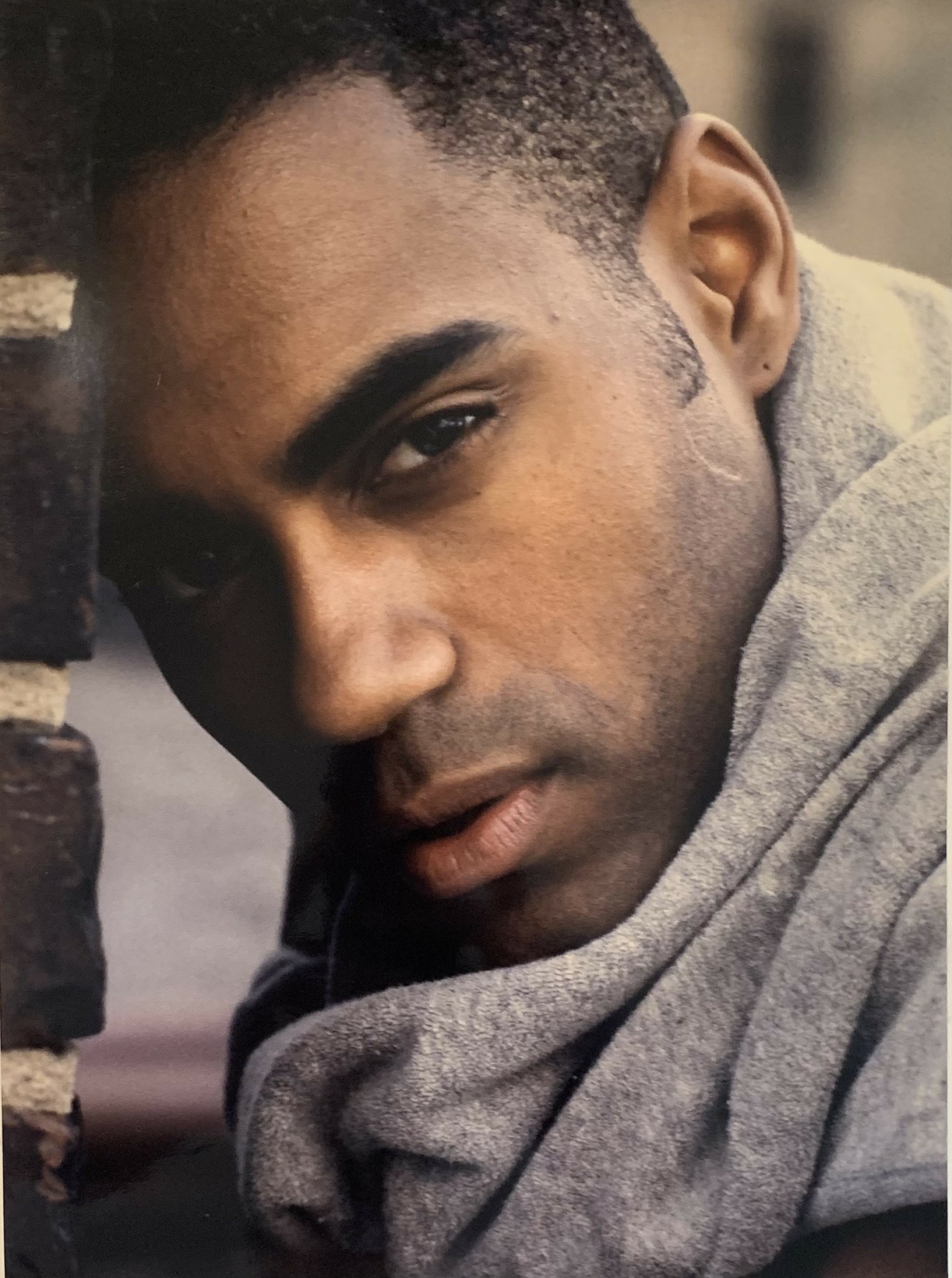
Picture it: Milan, Italy. You’re standing in the lush courtyard of Versace’s palatial headquarters, mingling casually with legends Donatella Versace and makeup artist Pat McGrath. It’s the kind of scene that could leave even the most seasoned fashion insider starstruck. Moments like these have defined Marc Rutherford’s path, and more often than not, he was the only Black man in the room. His rise through the fashion and entertainment industries has been shaped by that awareness and served to fuel his commitment to representation, diversity and mentorship.
Early Life and Career
Long before Rutherford was navigating fashion weeks in Paris or making power moves in Los Angeles, he was just a tall, curious kid with a taste for house music from the suburbs in Mississauga. The eldest of three boys born to Jamaican parents who immigrated to Canada in the 1960s, his father studied mechanical engineering at Ryerson University (now Toronto Metropolitan University); his mother began her 30-year career as a social worker for the government.
Rutherford was only 14 when his uncle took him along with his cousins to The Twilight Zone, Toronto’s legendary after-hours club, known simply as ‘The Zone’. “I shouldn’t have been there, but I was tall enough to pass,” Rutherford says, laughing. “The lights, the sound, the energy; something clicked.” The raw artistry of nightlife enchanted him. This early exposure to subcultures and nightlife sparked his interest in the world of fashion and image.
His path to working in fashion wasn’t a straight catwalk, though. After attending Saint Ignatius Loyola High, Rutherford enrolled at Carleton University for Legal Studies. As a student, he worked for the Federal Court of Canada, but disillusionment crept in over impersonal bureaucracy and backlogged cases.
Not quite ready to return to Toronto and craving something different, he followed the recommendation of his Carleton University roommate, Arlington Forbes, and moved to Montreal, and it changed everything.
In the early 1990s, Montreal was Canada’s fashion capital, with a booming textile industry fueling demand for local talent. Rutherford landed a bartending job at Buonanotte, a chic Italian spot on Boulevard Saint-Laurent, where he started meeting stylists, photographers, and creatives. Before long, he was hanging out at Planet Claire, a commercial photography agency. “I was always around. Eventually, they just gave me a job,” he recalls.
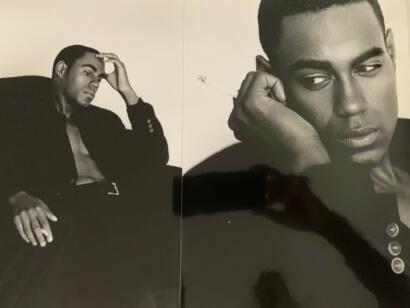
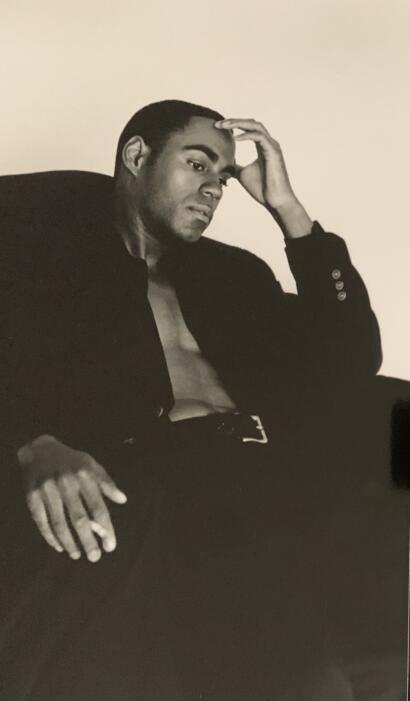
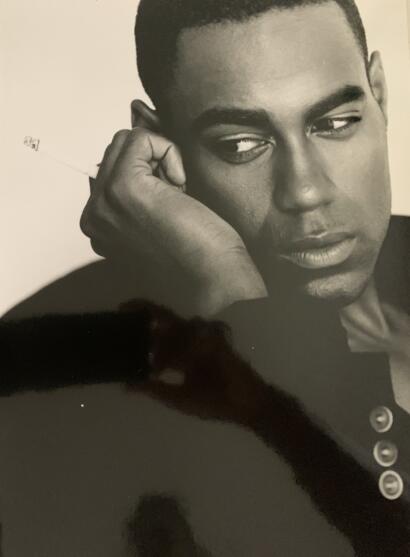
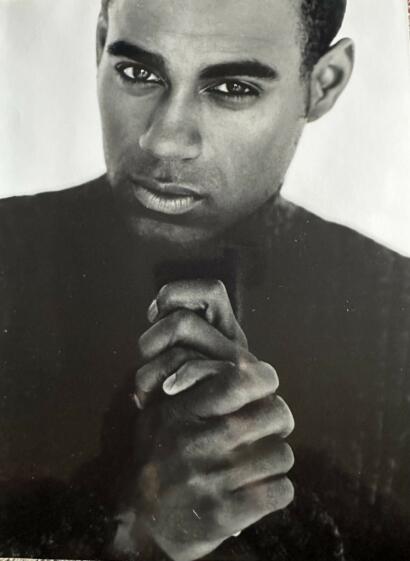
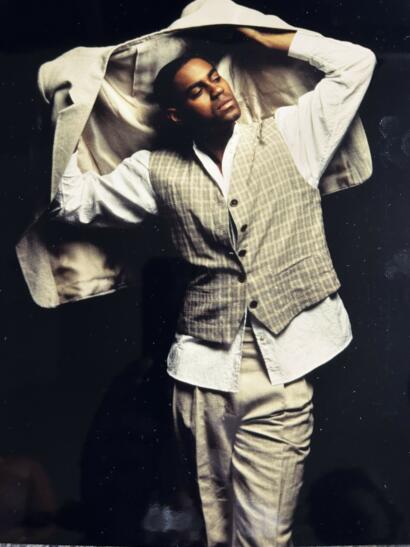
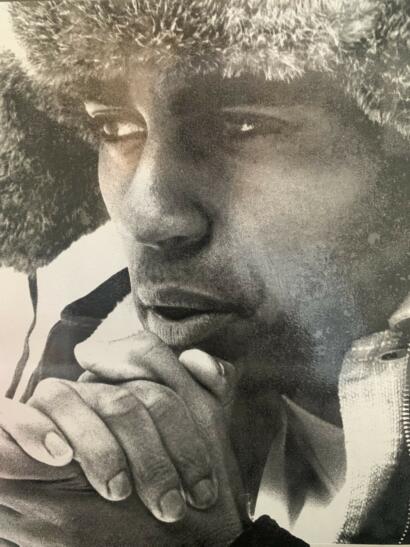
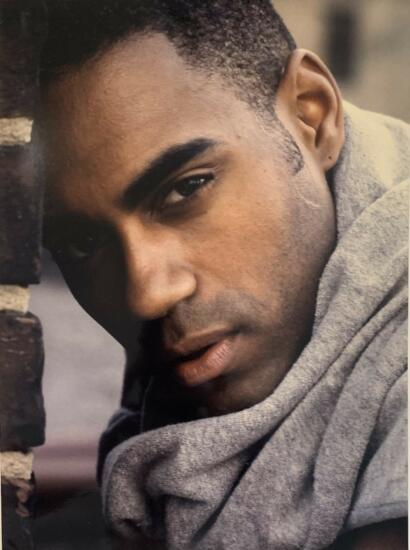
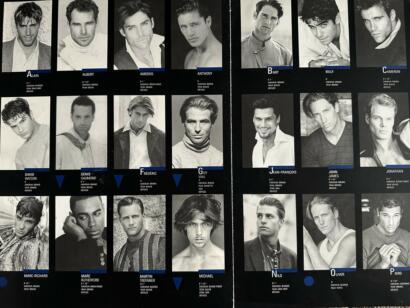
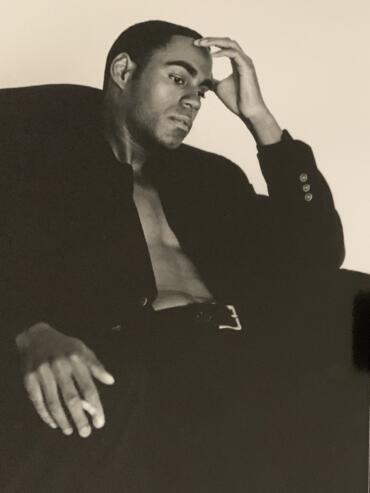
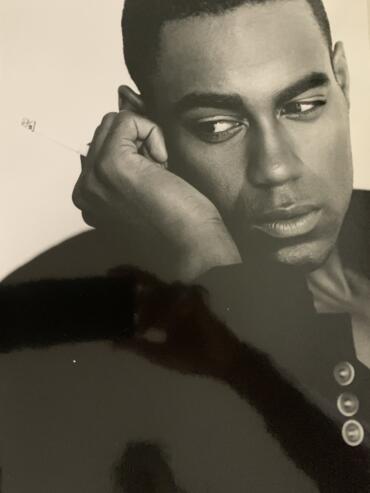
Friends recommended that Rutherford check out the local Montreal modelling agencies. “I went to Giovanni, Montage, and Folio. Folio signed me,” he explains. His tall frame and natural poise quickly made him a sought-after model. “Work came quickly. Back then, Hondo (Flemming) was the top Black model, and I was kind of number two. It was just Hondo and I, two soul brothers in Montreal,” he laughs. Zellers and Hudson’s Bay shot everything in the city, and there was plenty of work, but after the 1995 Quebec referendum, the industry took a hit. Companies moved their operations to Toronto, and the momentum vanished almost overnight.
Sensing it was time to move on, Rutherford followed his instincts and his old roommate, Arlington Forbes, to New York. “He was getting into film and TV, so I figured I’d bring my book and see what happened.” He visited all the major agencies, but a meeting at Wilhelmina proved pivotal. “The director flipped through my book and said, ‘You’re not ready for New York yet.’ She was right. It stung, but it made me realize modelling wasn’t the path.”
Eventually, he returned to Toronto and reconnected with photographer Christoph Strube, a former colleague from Planet Claire. “Christoph asked me if I’d ever thought about representing models,” says Rutherford. “I was ecstatic.” Strube called Elite Models with a glowing reference, and Rutherford was hired.
This special section creates a photo next to a pull-quote
After 30 years in this industry, I started thinking about how I could take everything I’ve learned and use it to open doors for others.
Especially for young Black, Asian, South Asian, and other people of colour who don’t always get a seat at the table. I want to help them build lasting, sustainable careers.
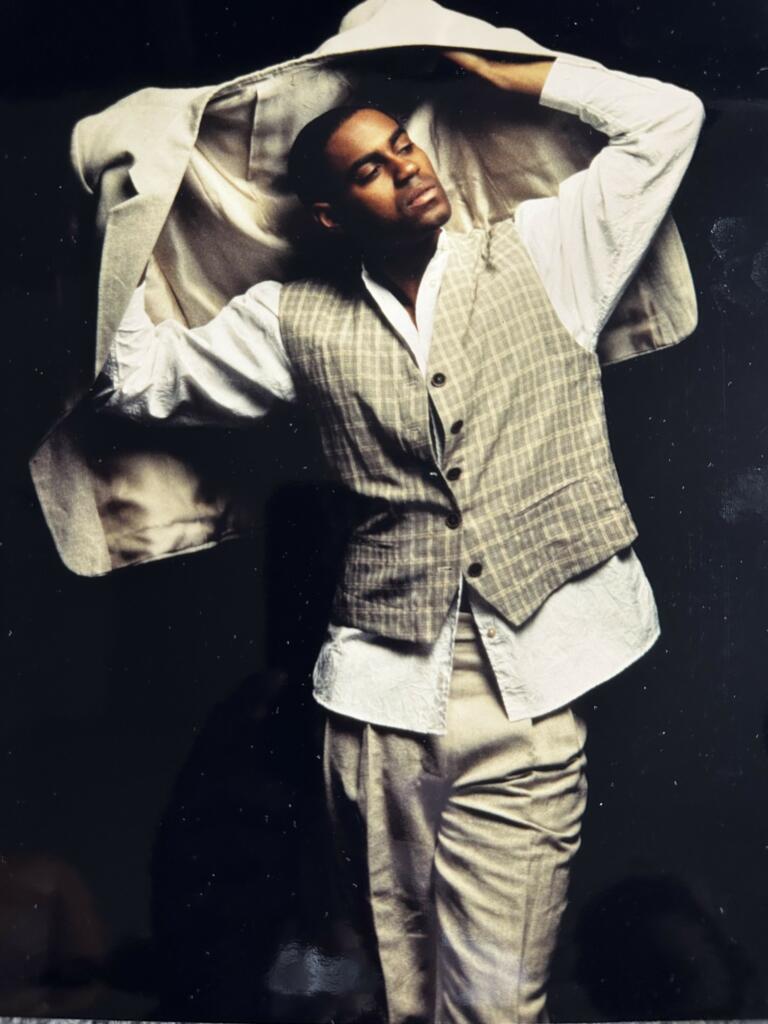
Once settled at Elite Toronto, Rutherford quickly began thinking beyond the local market. He saw an opportunity in importing talent from international hubs like Paris, Milan and London. While other agents balked at the cost, Rutherford leaned in. “I thought immediately, No, I can,” he says.
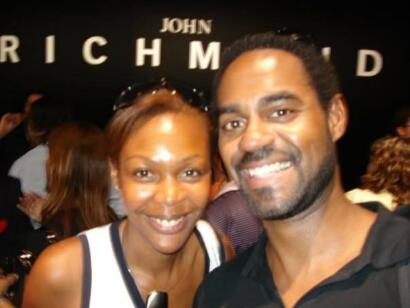
Regular trips to Europe followed. On one trip to Milan, ticketless and unprepared, he bumped into Celia Sears, currently the owner of Show Division, providing key hairstylists and makeup artists for top designers and fashion weeks worldwide. “She said, ‘Paul Wright couldn’t make it. Take his press pass.’” Rutherford spent the week in the photographers’ pit with a tiny digital camera, squeezed between long-lens pros. It was classic Rutherford hustle, and it helped push him all the way to agency director.
A shake-up at Elite led to another pivot, this time to L.A. Rutherford took over Elite’s West Coast office, relocating with his wife. “L.A. was still a B-market,” he explains. “Not like New York, Paris, or London. The big talent passed through, but they didn’t live there. It was a lot of denim and swimwear, and talent trying to move into TV and film. But I got the rhythm pretty quickly.”
After four years, Rutherford was ready to create something of his own. He partnered with producer Damion Brennan and launched Eight by 10, an agency representing photographers and directors.
One of their first signings was Jimmy Cohrssen, a Paris-based interiors photographer with clients like Louis Vuitton, Dior and Architectural Digest. Cohrssen says, “Marc always goes the extra mile. He gets it done.” Rutherford returns the compliment: “Jimmy always puts the client first.”
Business boomed. Their Sunset Boulevard office was thriving. But despite the momentum, L.A. never quite felt right. “There were a few scary moments,” Rutherford says, including one involving an active shooter outside his office. In 2013, he and his wife decided to return to Toronto.
Fashion and Diversity
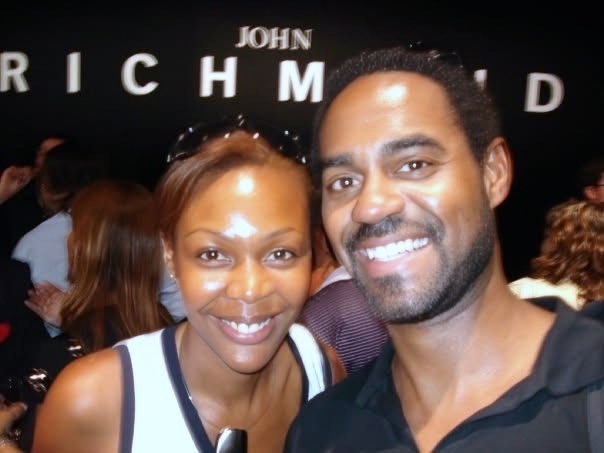
Whether it was on set or at high-level meetings, Rutherford often found himself as the only person of colour. “From early on, I understood I wasn’t just representing myself,” he reflects. “I was representing every Black professional and creative who didn’t get the invite. That meant I had to be twice as prepared, twice as sharp, and always on point.”
He remembers being the only Black person on set, in castings, and later, in boardrooms. That visibility came with pressure. “There was always that sense of needing to prove something,” he says. “Not just that I could do the job, but that I belonged there. That we belong.”
The conversation around diversity heightened in 2020 after the murder of George Floyd, but Rutherford is clear-eyed about what’s changed and what hasn’t. “The door opened a bit wider, sure. But it’s not swinging open on its own,” he insists. “We still have to fight for our place, for our value, for our visibility. Representation doesn’t just happen. It’s built, day by day, by people willing to keep pushing.”
Influence and Legacy
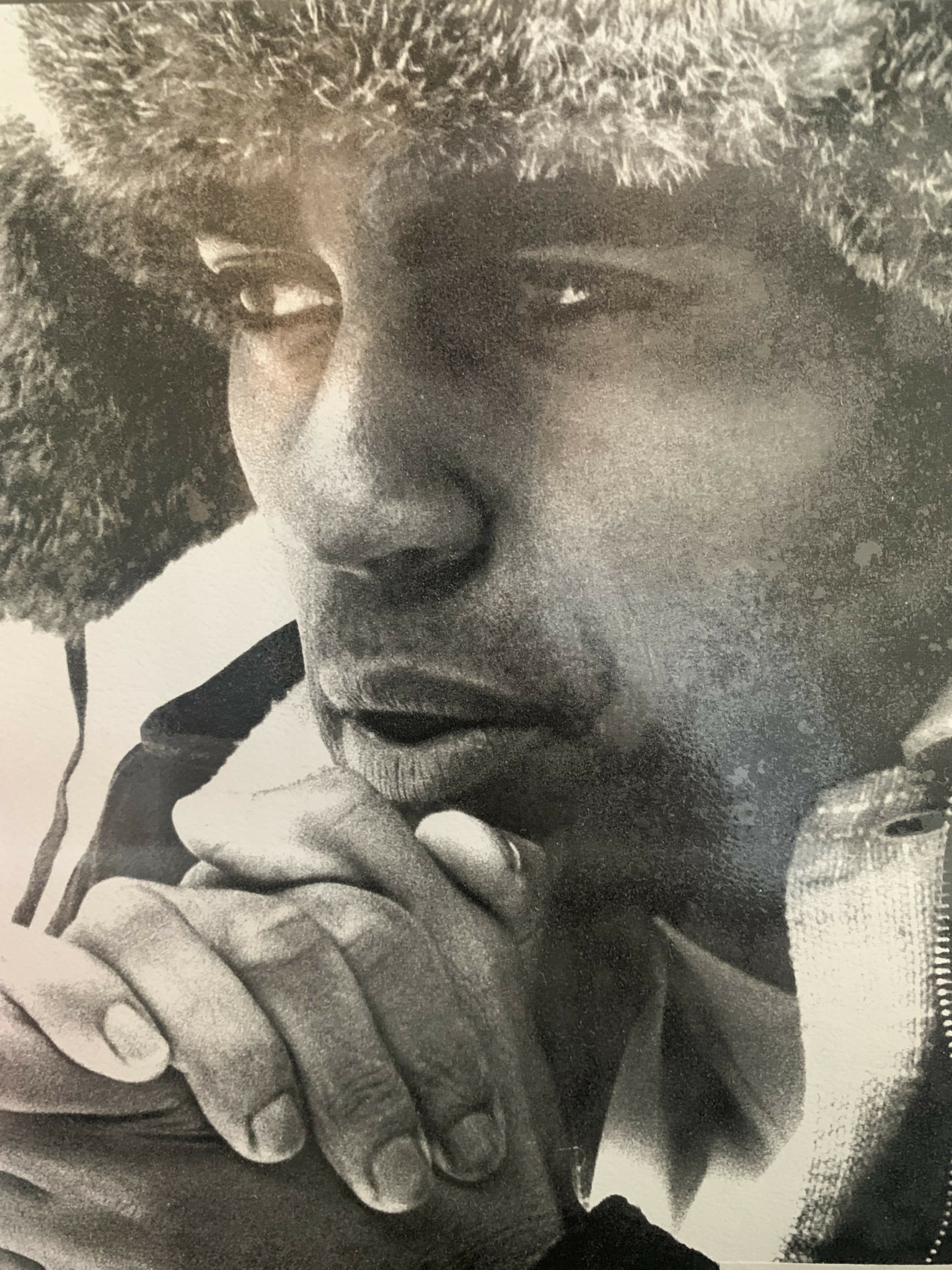
Ruth Gravity Artists, Rutherford’s agency named after the first four letters of his surname, is his latest venture. It’s a boutique agency representing principal actors, writers and directors in film and television. The agency reflects its mission to level the playing field. “After 30 years in this industry, I started thinking about how I could take everything I’ve learned and use it to open doors for others,” he says. “Especially for young Black, Asian, South Asian, and other people of colour who don’t always get a seat at the table. I want to help them build lasting, sustainable careers.”
”Back then, Hondo was the top Black model, and I was kind of number two. It was just Hondo and I, two soul brothers in Montreal,” he laughs.
Rutherford is uniquely qualified and positioned for this role. “I know what that feels like. And I know how to help others navigate it.” His vision is to build a fully integrated agency that connects clients to opportunities in publishing, branding, advertising, and public speaking, and to expand into New York and other markets.
From model to agent to agency founder, Rutherford has built his influence on a commitment to diversity, representation and mentorship across fashion and entertainment. He’s worked actively to break down barriers through advocacy, inclusive hiring and leadership that amplifies underrepresented voices. By pushing for systemic change, he’s played a key role in reshaping the landscape for emerging Black talent.