
 Close
Close
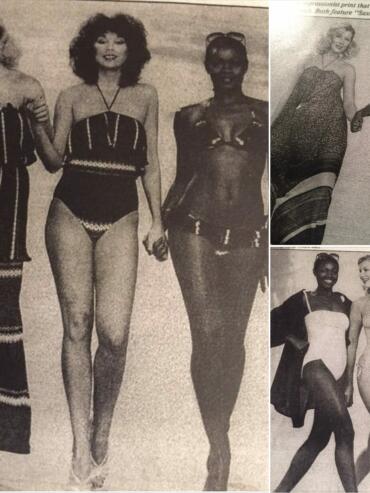
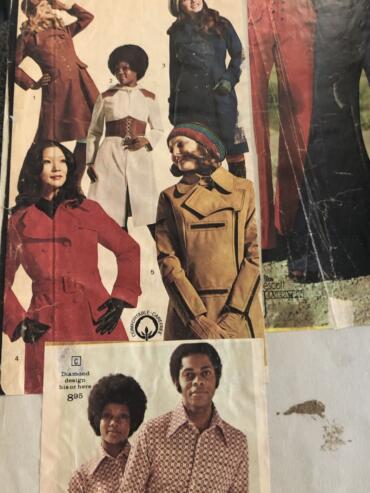
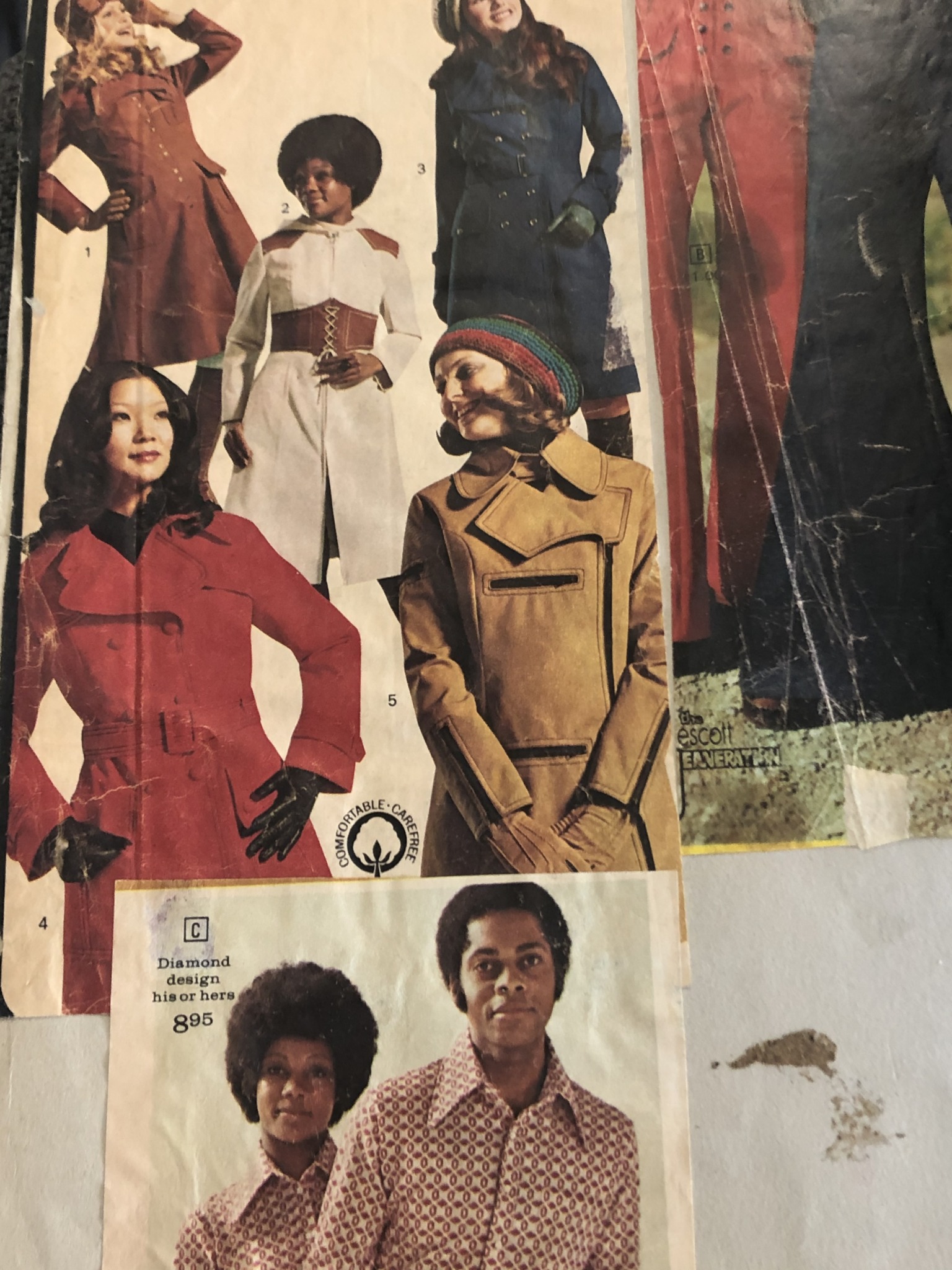
In the 1970s she was one of Canada’s first Black catalogue models, and went on to create Toronto’s first multicultural agency.
June 2025
Month 20xx
Dahab Shakoura & Kassandra Guevara
Charmaine Gooden
Jacob Marion
Jennifer Monteith steps out from a bustling meeting into a quiet hallway, taking a seat and propping her laptop on her knees. Her platform boots, reminiscent of the bell–bottoms and platforms from her audition days, serve not only as a fashion statement but also as a playful nod to her past. “They had no idea how tall or short I really was,” she laughs.
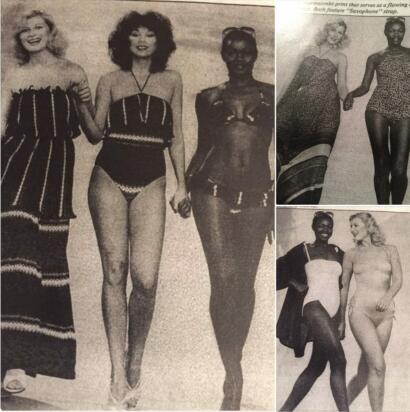
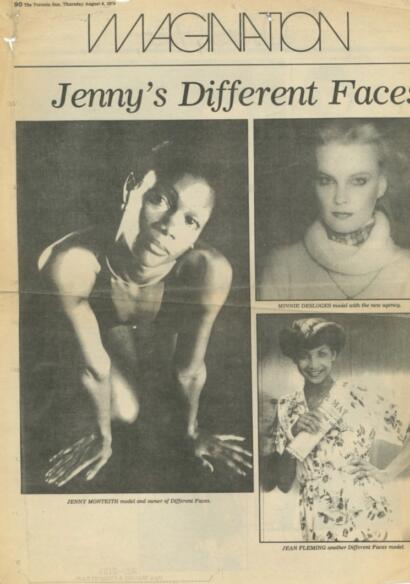
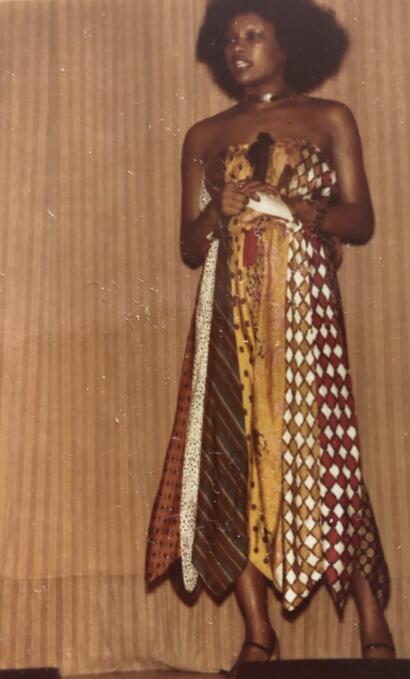
In the 1960s, when the fashion industry predominantly favoured a narrow, Eurocentric standard of beauty, Monteith’s mission was to carve out space for herself and others like her. She made history as one of the first Black models in the Canadian catalogue industry, and later, by founding Different Faces Model and Talent Agency, Toronto’s first multicultural agency. Her tagline? “For the world of different faces, male and female.”
Born in Kingston, Jamaica, Monteith is the second eldest of six children, three sisters and two brothers. She immigrated to Toronto at age 12 in 1964 and has called the city home ever since. Her love for fashion started at home, where Jennifer’s mother worked as a talented designer and dressmaker, sparking her daughter’s creative flame at an early age.
At Heydon Park Vocational (All Girls) School, Monteith excelled, not just as a budding fashionista but also as a gymnast, which was one of her first passions. Crowned the school queen for two consecutive years, her grace and charm were undeniable. Encouraged by her gym teacher, Monteith enrolled in Patricia Stevens Finishing School, setting the stage for a decades-long career in fashion.
Monteith’s rise was guided by mentors who recognized her potential. One such mentor was Ettie Dawkins, an established and well-known model in Toronto, who booked Monteith for her first modelling job. “Ettie suggested that I register with Producer’s Services, a talent and modelling agency run by Molly Petti, mother of TV host Dini Petti,” she explains.
“When [Ettie] was double–booked, she would call me to step in for her, especially for catalogue shoots. Thus, my jaunt to Bermuda for my first on–location shoot,” says Monteith. At just 17, she flew to Bermuda for her first catalogue shoot with JCPenney, an experience that gave her a first taste of international opportunity.
Another key figure in Monteith’s career was Olivia Grange, a journalist and cultural advocate, now Jamaica’s Minister of Culture, Gender, Entertainment and Sport, who introduced Monteith to major opportunities, including being a finalist for Miss Chin Picnic, Miss Jamaica-Canadian Association’s first runner-up (1969) and appearing on the cover of Ken Boothe’s Reggae for Lovers album.
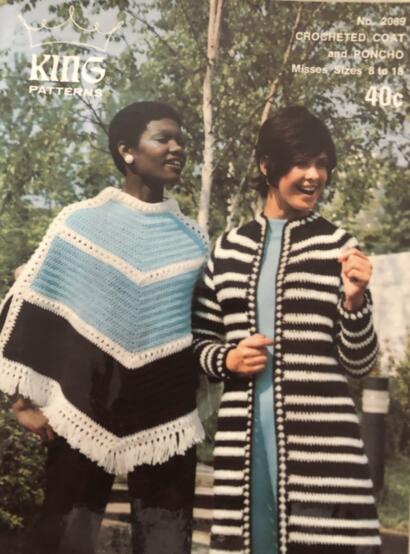
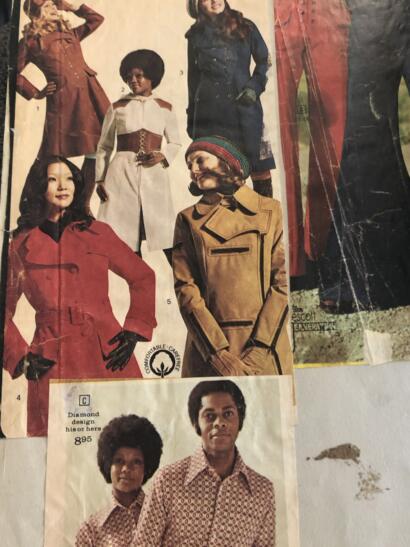
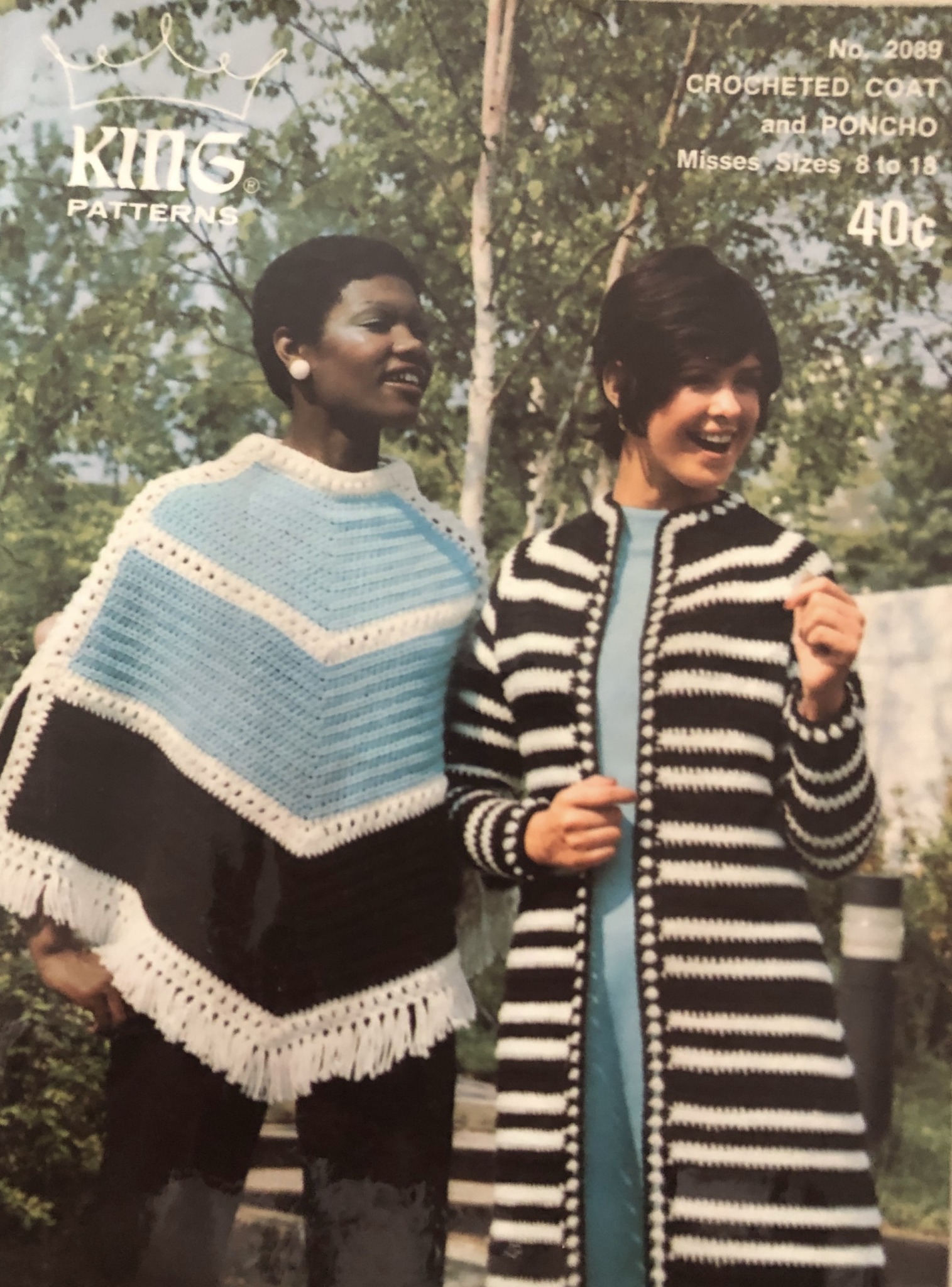
Longtime friend Linda V. Carter, who has known Monteith for nearly five decades, recalls those early days. “She was younger and smaller, so they used her for junior modelling. They called her ‘jumping junior Jennifer.’ She was always in catalogues and things like that.” Monteith appeared in catalogues for Sears, Eaton’s and Kings Patterns, as well as in advertisements on the front and back of national TV Guides.
This special section creates a photo next to a pull-quote
When Monteith entered the fashion world as a model, she wasn’t thinking about race; she was thinking about possibility.
“I didn’t go in feeling Black. I went in knowing it was time for more colour in the palette… I was chosen to be there. I was sure of myself — more than most.”
“Back in the day, I did my own hair and my own makeup, even brought my own basic shoes,” Monteith recalls.
Over her modelling career, Monteith found representation with three agencies: first with Molly Petti Producer’s Agency, followed by Judy Welch’s agency and later briefly with International Top Models at Yonge and Gloucester Street.
Monteith also made time to continue her education. In 1983-84, she attended Loyalist College in Belleville, Ontario, where she studied in an accelerated Business Administration program which included business law, accounting, marketing and economics.
When Monteith entered the fashion world as a model, she wasn’t thinking about race; she was thinking about possibility. “I didn’t go in feeling Black,” she says. “I went in knowing it was time for more colour in the palette… I was chosen to be there. I was sure of myself, more than most.”
Her confidence was unshakable. “Yes, I’m Black, but I am Jennifer Monteith. I’m not just a Black model who had a heart transplant. I am Jennifer Monteith.” That self-assuredness wasn’t just a performance; it became her armour in an industry often intent on fitting people into boxes.
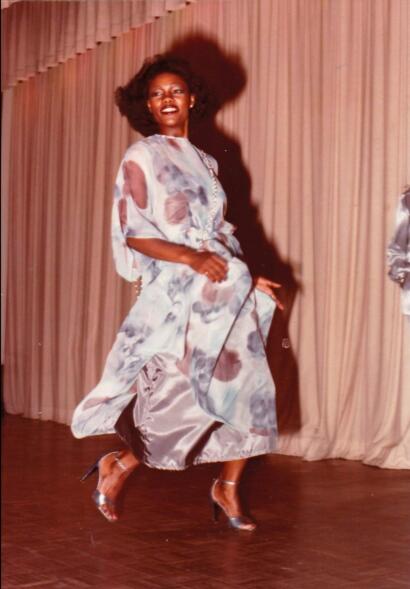
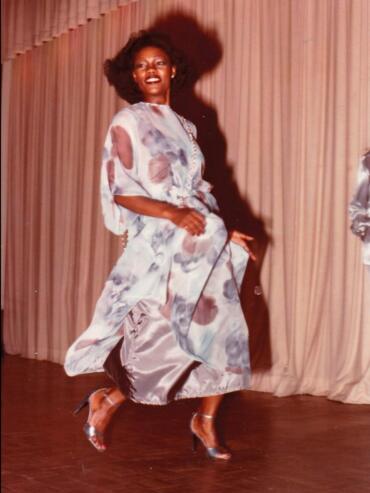
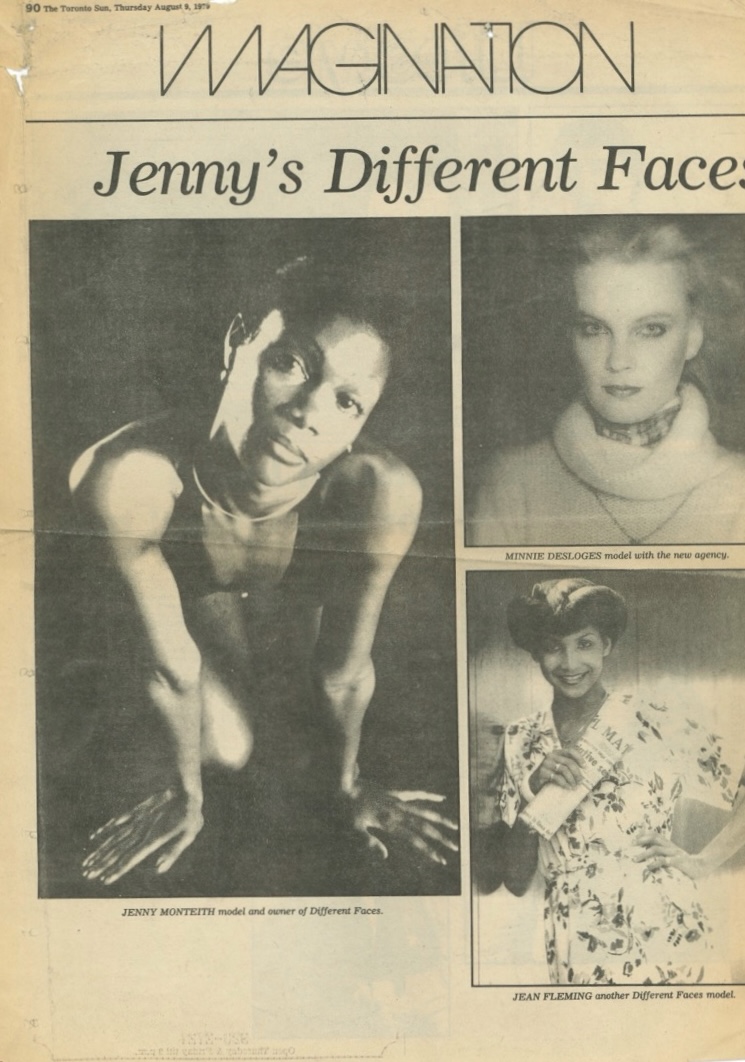
In 1976, she founded Different Faces Model and Talent Agency in response to the clear need for multicultural representation in fashion. “The demand for multicultural models became very apparent,” she explains. Drawing from her own experiences as one of Toronto’s first Black models, Monteith mentored young women in her community, training them for careers in showroom, runway and catalogue modelling.
Monteith’s impact extends beyond fashion. She is the founder of the JM Exhibitor Support Centre, a service hub for Toronto’s trade shows and conventions. The center offers last-minute office supplies, equipment and even scooter rentals. It is aptly dubbed “The office away from the office.” Her work has earned her respect from celebrities, event organizers and even royalty.
Despite all her career success, it’s Monteith’s personal journey that makes her truly extraordinary. In 2010, she underwent a life-saving heart transplant after spending 20 months living with a Left Ventricular Assist Device. Since then, she has become a vocal advocate for organ donation, volunteering with the Trillium Gift of Life Network and sharing her experience to inspire others.
In 1976, she founded Different Faces Model and Talent Agency in response to the clear need for multicultural representation in fashion. Drawing from her own experiences as one of Toronto’s first Black models, Monteith mentored young women in her community, training them for careers in showroom, runway and catalogue modelling.
Now, at 72 years old and 14 years post-transplant, Monteith’s determination remains undiminished. “Knowing who you are and enhancing what you’ve got, that’s what you bring forward,” she says.
In 2022, her achievements were officially recognized when she was named one of the 100 Accomplished Black Canadian Women (100ABC). A fitting tribute to a woman who continues to shape her legacy, one bold step at a time.
Monteith’s friend, Carter, captures her legacy best: “Enduring,” she says, when asked to describe Monteith. “You think of what she’s gone through in life, and it’s just remarkable. No matter what is handed to her, she just finds a way of making lemons into lemonade.”