October 2026
Month 20xx
Jin Yu and Neesa McRae-McNicholls
Charmaine Gooden
Jacob Marion
Highlights
- Beach was featured in Flare alongside designers including David Dixon and Crystal Simons during her early career as a fashion designer.
- She transitioned from fashion design into corporate branding, finding a way to combine her creative instincts with her business background.
- Designed commemorative jackets for the New York Knicks’ 1970 championship team, with the finished pieces presented to the players at Madison Square Garden.
- Beach organized Angie’s Jam-N-Bread, a fundraising event supporting Food Banks Canada in honour of her late sister, and taught herself to play drums in six months to perform at the event.
Beginning of article
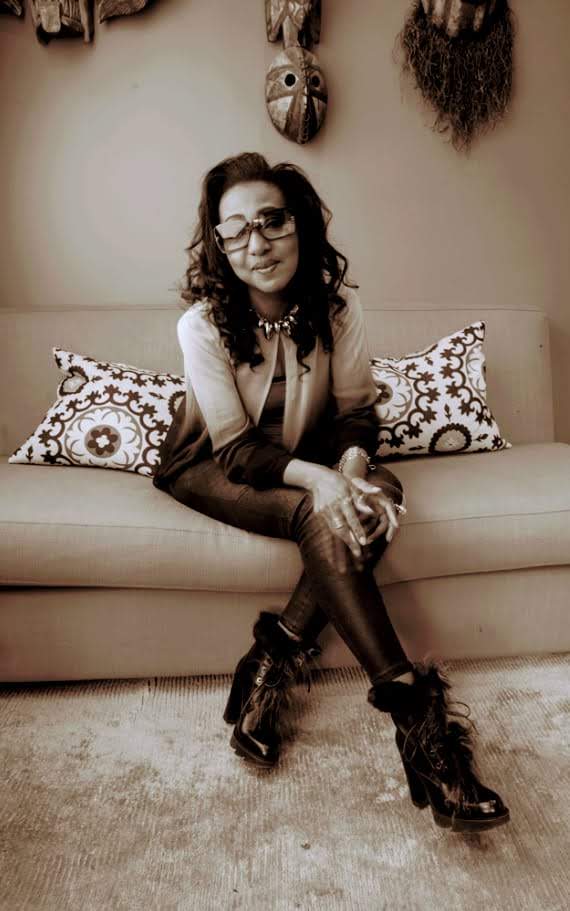
When a corporate brand needed more than a logo or a standard piece of merchandise, Karen Beach saw an opportunity to design something with a point of view. Her work included apparel for Harley-Davidson, commemorative jackets for the New York Knicks and custom merchandise for corporate clients across North America.
As Vice President of Sales and Development at MyBrandWorx, Beach operated between fashion and business, bringing the instincts of a designer into a world often dominated by promotional products and corporate branding. For her, the challenge was always to make the ordinary feel considered.
This special section creates a photo next to a pull-quote
Early Life and Career
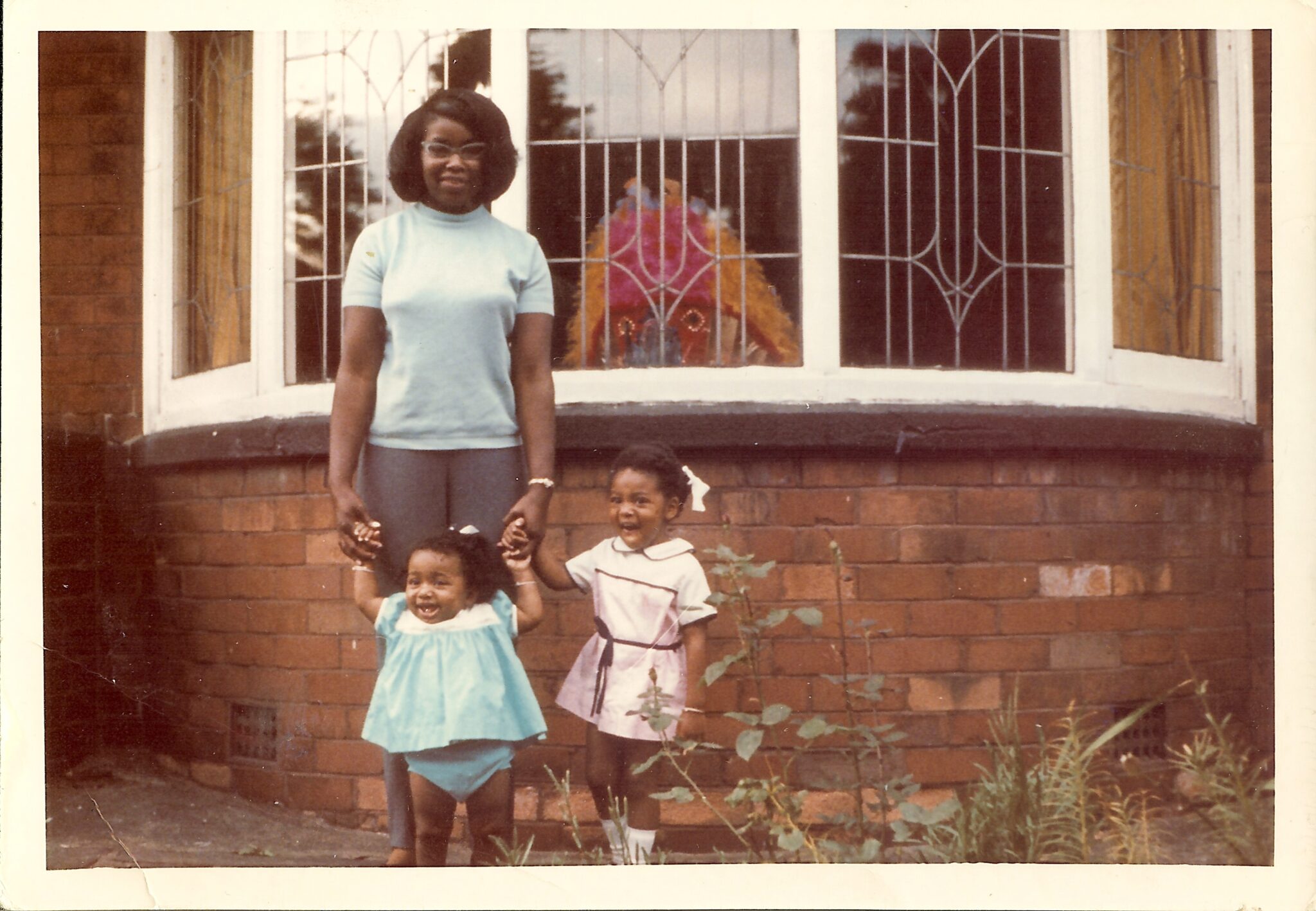
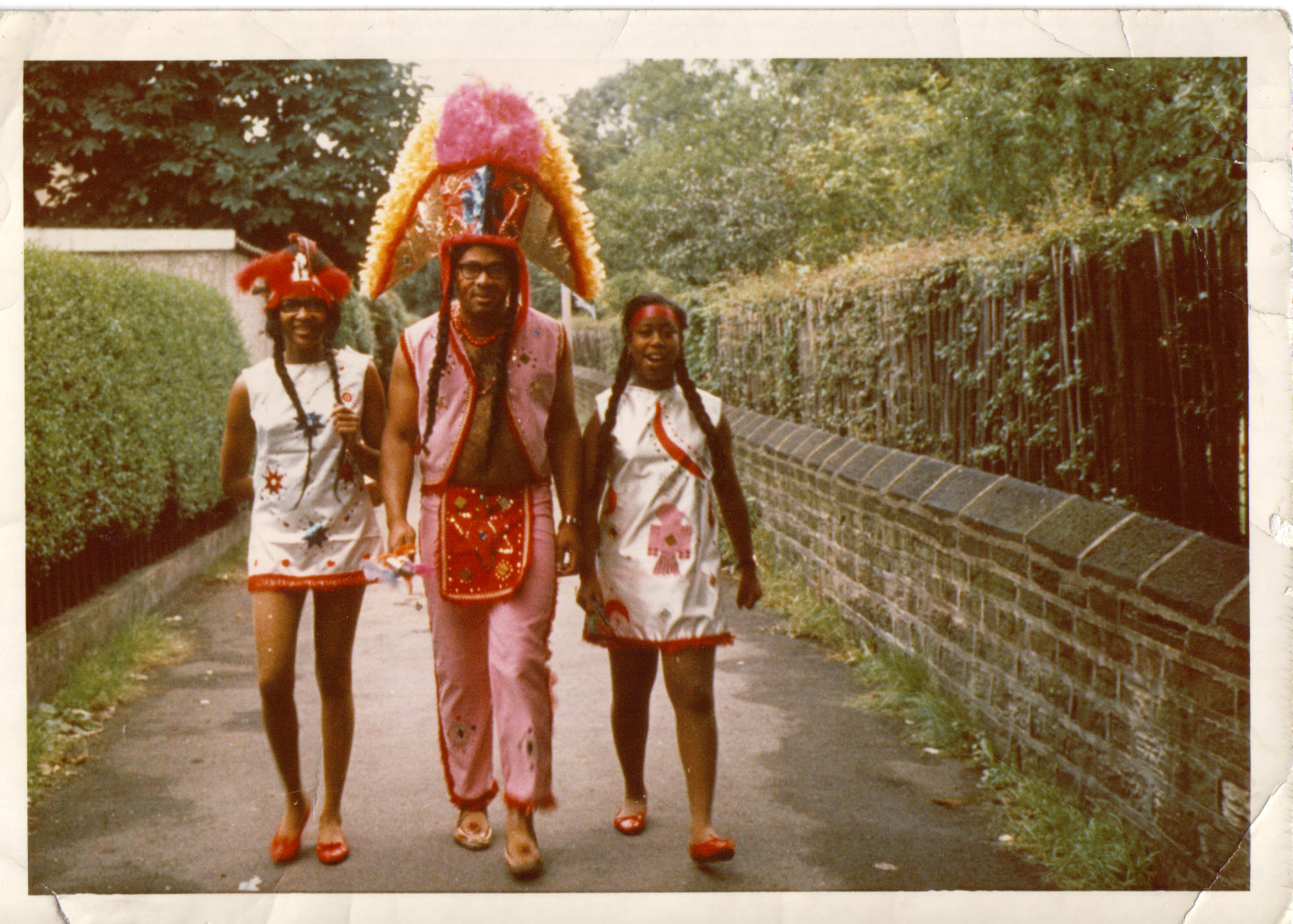
Beach was born in Leeds, England, to Calvin Beach and Hyacinth Beach (né France) of Saint Kitts and Nevis. She grew up surrounded by a tight-knit Caribbean community of artisans. “It was a great time to be in England because it was a true community,” she recalls. Her childhood brimmed with creativity; her great-aunts were master seamstresses at Burtons, a renowned men’s suiting factory, while her father, an engineer, crafted elaborate kites and costumes for England’s first West Indian Carnival. “We grew up around people sewing and making things,” Beach says. “It was something we loved doing, and we were always proud of it.”
That early exposure to craftsmanship extended beyond the home. The Caribbean dance theatre her family ran, complete with music, costumes and choreography, championed causes when Caribbean immigrants “were not welcome.” The theatre even performed for the Queen, and its productions left a young Beach inspired by the intersection of art and activism. “We grew up with a strong sense of ‘You’re amazing, you can do it,’” she says. “There were no barriers too big.”
Beach’s artistic inclinations flourished alongside her academic excellence. By 10, she had finished her school curriculum six months early and was tasked with organizing an art show to mark her school’s centennial. “I had to recreate costumes and vehicles going back 100 years, all to scale and technically accurate,” she reminisces. The project honed her precision and discipline, qualities that would later shape her design career.
After moving to Canada, Beach continued to prove her academic abilities, condensing five years of high school into four and completing a four-year university degree in three, all while designing clothes and sketching in her free time. Though she initially pursued dentistry, a path she admits “made me cringe,” she ultimately switched from sciences to business. “I had a feeling if I went into fashion, business would be an asset,” Beach says, a decision that would prove pivotal.
Beach’s best friend from high school, Stephanie Vaccari, remembers her as “very smart and very academic.” The pair, inseparable despite their differing paths, would “touch base daily,” Vaccari says. “Karen always knew she wanted to go into fashion, but she also knew she wanted a business foundation to grow her brand.”
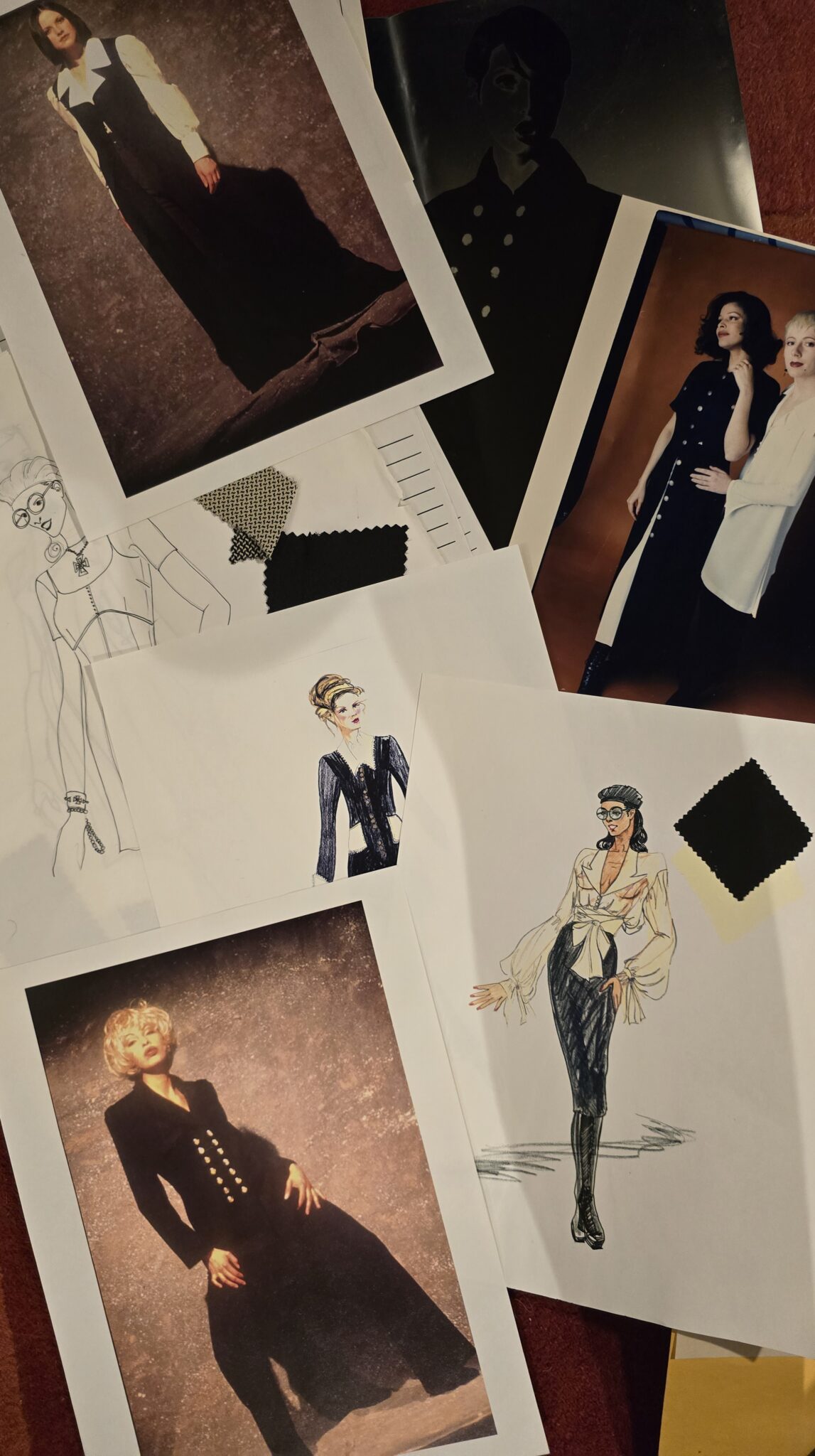
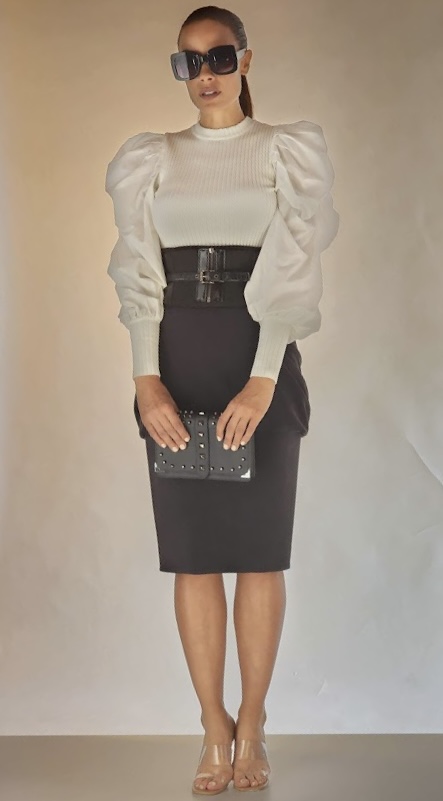
Beach’s designs blur the lines between corporate and couture, upgrading what might otherwise be mundane.
After university, Beach worked in the insurance industry, but remained curious about her creative passions. At a Toronto party one night, Beach met designer Ian Hylton and editor Suzanne Boyd, prominent figures in the city’s Black fashion community. “They were so fabulous,” she recalls. “I thought, wow, look at these beautiful, inspirational Black people. I wanted to see if I could join those ranks.”
Her first break came through Jazma Hair, a renowned Black hair salon she frequented in Yorkville, when stylists asked her to design costumes for a high-end hair show in the U.S. “I could either go back to school or spend the money creating a line,” she laughs. “I made the costumes; they were ugly, but they loved them.” That project led to commissions for wedding dresses, bridesmaid gowns, and costumes for the Toronto Caribbean Carnival, solidifying her reputation as a designer.
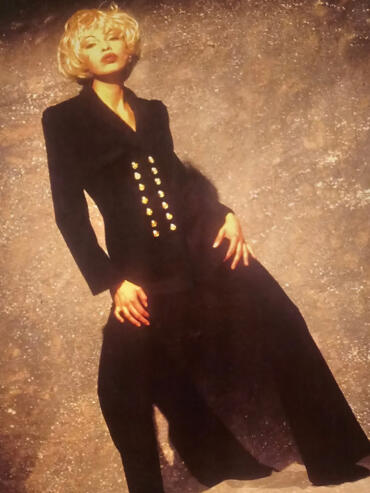
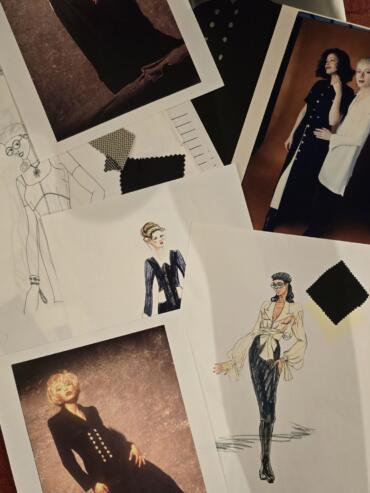
By the early 2000s, Beach was a rising star in Canadian fashion, featured in publications like Flare alongside other local designers including David Dixon and Crystal Simons. Despite the accolades, Beach realized that designing high fashion wasn’t a sustainable business in Canada. “The highlights started to outweigh the reality of managing cash flow,” she explains. Recognizing a shift in the industry, she transitioned to corporate branding, a decision that set her apart.
One of her earliest branding projects involved a motorcycle brand she admired, whose designs she openly criticized. “I was pretty cheeky at the time and called to tell them their stuff was awful. I don’t know where I got the nerve,” Beach says. Her boldness landed her a contract, and she quickly mastered private-label branding. “I loved the challenge of going behind the scenes of the brand and designing it into a business solution,” she says.
In 2012, Beach founded MyBrandWorx, where she continued to lead as Vice President of Sales and Development. The company specializes in custom corporate merchandise, blending her love of design with her business insight. “I’ve been able to merge both worlds,” she says. “Creativity with design.”
Fashion and Diversity
As a Black woman in fashion, Beach faced both subtle and overt racism, but she refused to let it define her. “Oh yeah, I’ve experienced racism,” she admits. “But I find it funny. I just present excellence, and they get over it.”
Many of these experiences stem from phone interactions, where clients often assumed she was white. One encounter with an unnamed American heritage brand, whose executives refused to engage with her after meeting in person, ended with a fruitful partnership. “I wouldn’t budge; we sat there for three hours staring at each other,” Beach recounts. “Eventually, they looked at my designs, and they loved them. That client is now one of my best customers.”
Beach also challenged assumptions within her own community. “I’ve had Black clients think I was white based on my accent,” she says, noting it was almost enough to discourage them from seeing her. “I had to be explained at the start of every meeting: ‘She’s got a funny accent, but she’s cool.’ That was always the intro.”
She approached these situations with humour and practicality, with a philosophy rooted in the bigger picture. “There’s strangeness out there, but if you lead with love, most people respond positively,” Beach says. “I don’t really go looking for it, and I don’t find [discrimination] that much. And if I find it, I just transform it.”

Influence and Legacy
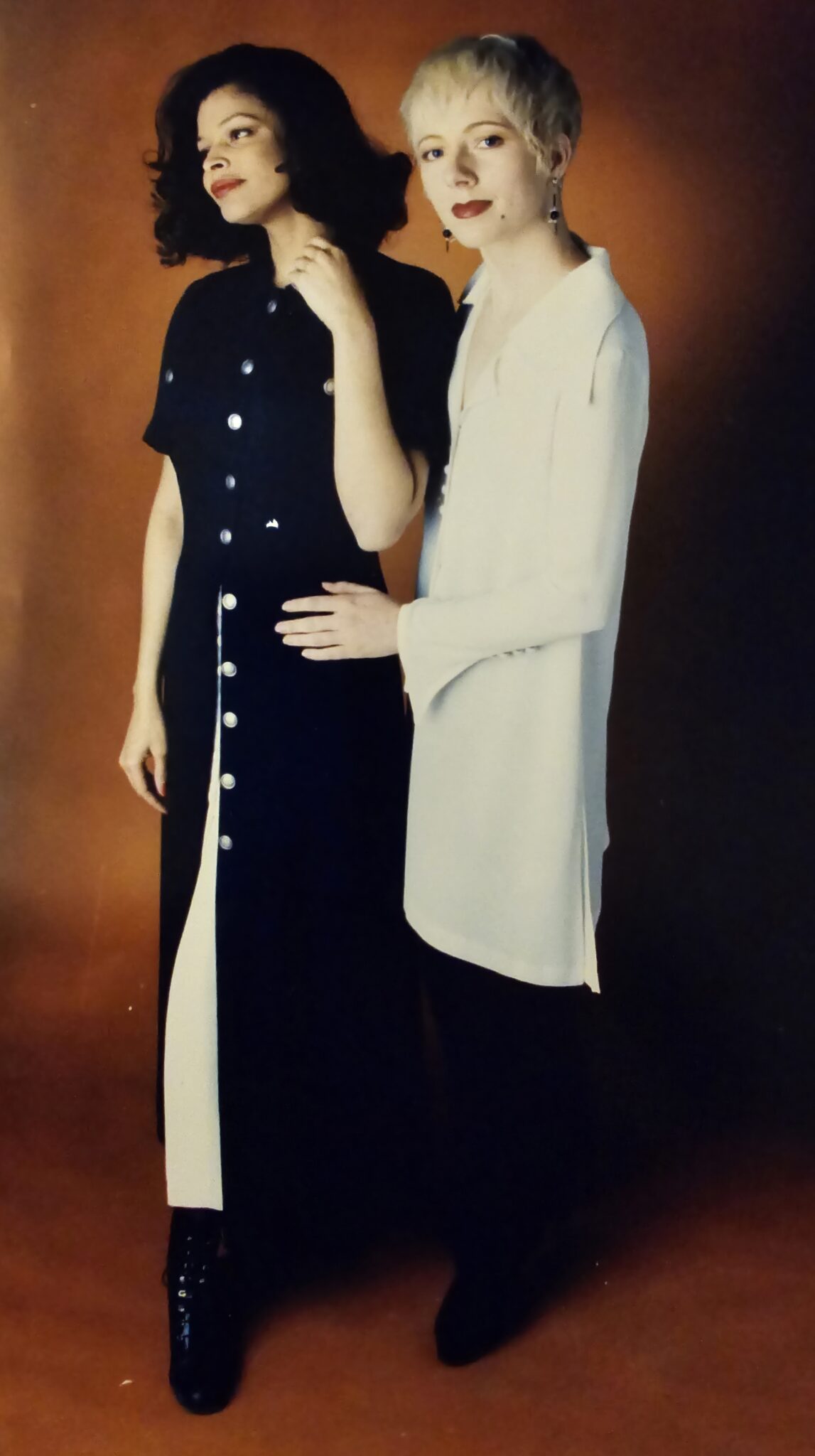
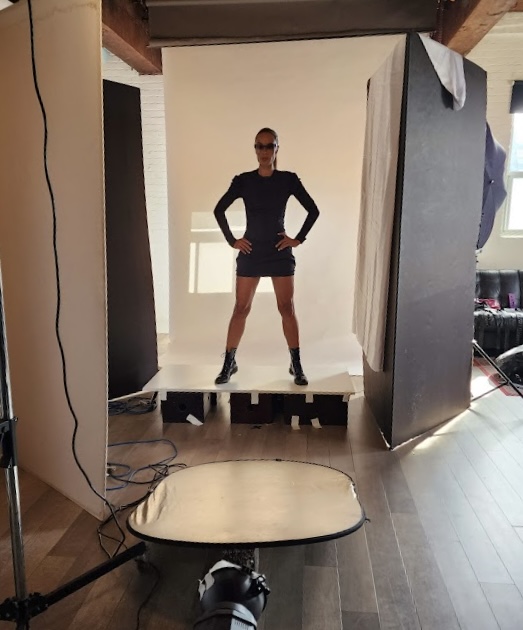
Beach’s ability to merge creativity with strategy has revolutionized corporate branding. From designing apparel for Harley-Davidson to commemorative jackets for the New York Knicks, she brought thoughtfulness and precision to every project. Photographer Adrian Fiebig, who has collaborated with Beach since the mid-1990s, describes her as “a powerhouse.” “Karen’s determination and her rock-and-roll edge make her one of a kind,” he says.
One of her proudest moments was the Knicks project, where she designed jackets to commemorate the team’s 1970 championship. “It was one of the smallest and fastest orders I’ve ever done,” Beach says, recalling the challenge of guessing measurements for retired players. The results, presented live at Madison Square Garden, moved the players to tears. “Knowing we touched their hearts was amazing.”
Vaccari says Beach’s designs blur the lines between corporate and couture, upgrading what might otherwise be mundane. “She saw an opportunity to elevate swag into something stylish and high-quality.”
Beyond her designs, Beach was committed to mentoring the next generation. “She’s a great mentor,” Vaccari adds. “Karen is very giving with her time and shows younger designers what resilience and creativity can achieve.”
Her personal life reflected the same spirit. Beach organized Angie’s Jam-N-Bread, a fundraising event supporting Food Banks Canada and honouring her late sister, Angela Jones, who lovingly served the organization as the national food sharing coordinator. In 2023, over 150 people attended, and Beach performed on the drums, an instrument she taught herself to play in just six months. The second event took place on November 9, 2024.
I loved the challenge of going behind the scenes of the brand and designing it into a business solution.
Beach’s journey was a testament to resilience and creativity. From her early days stitching outfits for her dolls in Leeds, to her role as a leader in corporate branding, she consistently pushed boundaries while staying true to herself.
Her success never changed her grounded perspective, viewing her career as a mix of triumphs and learning experiences. “She’s a warrior,” says Fiebig, praising her ability to navigate personal loss, professional challenges and systemic barriers.
For Beach, the highs and lows were all part of the journey. One that gave her a “full circle” experience throughout her career. “Everything I thought I’d left behind, I’ve been able to do it all,” she says. “Because I was told that I can.”
At the young age of 58, Beach died from cancer on Saturday, September 12, 2026.
Archive of images at BFC: